General & Family Dentistry

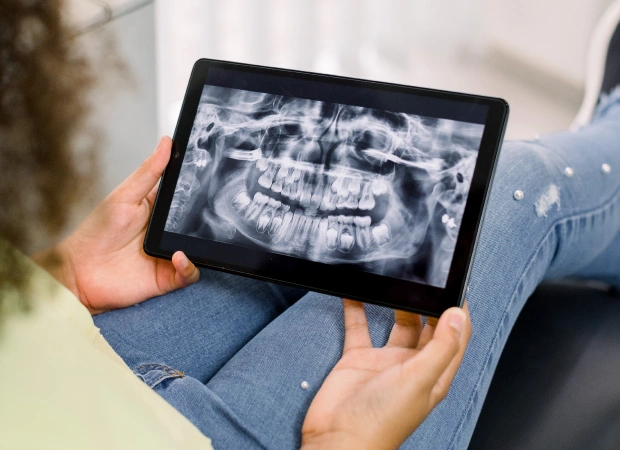
Precision Dental Care Starts With Digital X-Rays
Your smile can hide problems that aren’t visible to the naked eye. Digital X-rays help detect hidden cavities, bone loss, impacted wisdom teeth, and other issues early. Using a minimal amount of radiation, advanced digital technology produces clear, detailed images quickly and safely, allowing for more accurate diagnoses, faster results, and peace of mind.
Why Digital X-Rays Matter
X-rays are an essential tool for detecting dental issues that a visual exam alone may miss. They can reveal hidden cavities, root infections, cysts, and changes in bone structure, and are also crucial for planning treatments such as crowns, implants, or braces.
Digital X-rays make this process safer and more efficient. They reduce radiation exposure by 80–90% compared to traditional X-rays and provide instant, high-quality images that can be enhanced for precise treatment planning.
The frequency of X-rays varies based on your oral health. Healthy adults may only need them every few years, while children or patients prone to cavities or gum disease may require them more often. Together, we’ll determine the schedule that best supports your dental health and smile.
Types of Dental X-Rays
Intraoral X-Rays – Taken inside the mouth, these X-rays provide detailed views of individual teeth and surrounding structures:
- Bitewing: Detects decay between back teeth and hidden issues beneath existing fillings.
- Periapical: Shows the entire tooth from crown to root, useful for evaluating pain or previous dental work.
- Occlusal: Captures the roof or floor of the mouth, helping identify extra or impacted teeth.
Extraoral X-Rays – Taken from outside the mouth, these X-rays provide a broader view of oral structures:
- Panoramic: Produces a single image of all teeth, jaws, and sinuses—ideal for overall evaluation.
- 3D Cone-Beam (CBCT): Creates a detailed three-dimensional image, essential for planning complex treatments like implants or orthodontics.
Safety Comes First
Modern digital X-rays use very low levels of radiation—similar to natural background exposure or a short airplane flight. We follow strict safety guidelines, taking X-rays only when necessary and minimizing exposure. While recent ADA guidance notes that lead aprons may not always be required, we comply with local regulations and prioritize your comfort.
What to Expect During Your Visit
During your appointment, you’ll sit or stand while a digital sensor captures the images. The process is quick, painless, and efficient. Because digital X-rays appear instantly, your dentist can review the images with you in real time and explain any findings or recommended next steps.
Keeping your smile healthy starts with seeing what’s happening beneath the surface. Schedule your visit today for a safe, comfortable, and informative digital X-ray experience.